
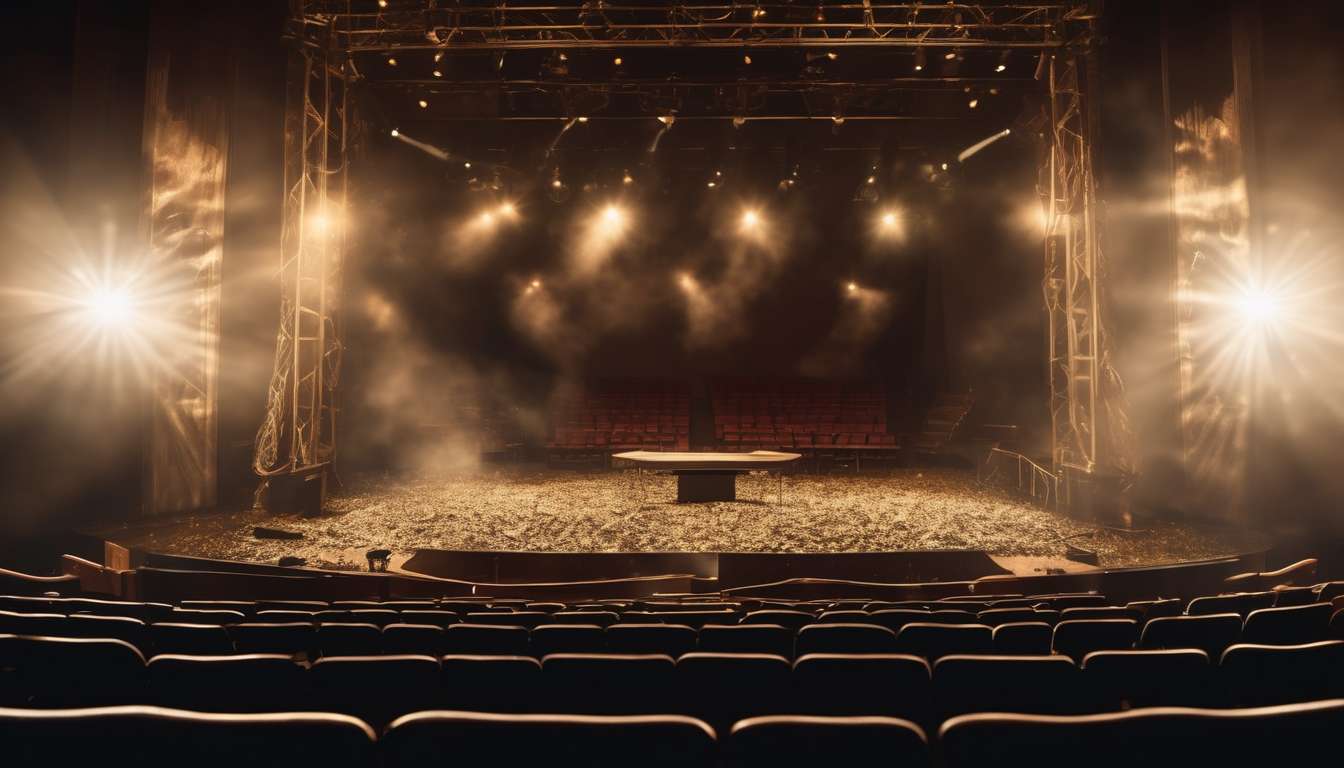
A backstage manager finally locks the dressing-room door, and we hold our breath as tension hums through the wings.
We have watched crews negotiate sudden schedule changes, performers press for fair pay during sold-out runs, and technicians push for safer working hours after another all-nighter.
That one locked door becomes a microcosm of a larger struggle: equitable contracts, predictable schedules, portable benefits and the power imbalance between producers and the people who make shows possible.
As producers promise magic onstage, we grapple with the invisible labor that underpins every cue, costume change and lighting shift.
This article follows our conversations with union organizers, venue operators and touring crews, tracing how labor-rights debates are redrawing contracts, routing and revenue in live entertainment.
We aim to illuminate both the human stakes and the industry mechanics at play, showing how everyday decisions in rehearsal rooms and loading docks are remaking an entire sector.
Rising Union Influence
We’re seeing unions gain real leverage across live entertainment as workers organize more effectively and press for stronger contracts.
Unionization is more than a tactic — it’s how we claim a seat at the table and protect each other’s careers.
We celebrate wins that expand collective bargaining beyond wages to scheduling, safety, and predictable workloads.
These outcomes help keep crews working together longer and reduce turnover.
Portable benefits matter when gigs move city to city or season to season.
We’re pushing for systems that follow the worker rather than the employer so benefits remain continuous across jobs.
We build solidarity by sharing strategies, mentoring newcomers, and showing up at meetings and votes.
That steady presence makes bargaining more effective.
We hold each other accountable to commitments made at the table.
Turning negotiated language into workplace reality ensures agreements mean real protections and practices on the job.
We want membership to feel like mutual support, not paperwork.
We organize with clear goals so every advance strengthens the whole community and creates sustainable careers across stages and tours.
Contractual Power Shifts
Power is shifting toward workers through negotiated agreements and new hiring practices.
Collective decision-making is becoming normalized through unionization.
- Collective bargaining now shapes contracts that used to be one-sided.
- Negotiated clauses define work scope, grievance processes, and safety protocols so crews feel protected and included.
We are building structures that give everyone a clearer stake.
- Agreements create enforceable mechanisms for participation and accountability.
- Practical, participatory conversations ensure terms are accessible and understood by all.
Hiring practices are being redesigned to reduce favoritism and strengthen trust.
- Transparent rosters and skill-based assignments prioritize fairness.
- These practices increase community trust and improve crew morale.
Portable benefits are being pursued to reduce precarity for freelancers and touring staff.
- Health coverage and retirement that carry across gigs make the sector feel more communal.
- Portable benefits improve retention and financial stability for itinerant workers.
Producers and managers are adapting to shared power because it produces operational benefits.
- Acceptance of shared decision-making leads to steadier operations and better retention.
- A sense of belonging is emphasized as foundational to every contract change we pursue.
Scheduling and Overtime Battles
We’re pushing back on unpredictable schedules and unpaid overtime that burn out crews and undermine show quality.
Late calls, split shifts, and sudden cancellations don’t just strain individuals — they fracture teams and harm productions.
We’re organizing through unionization to demand predictable, humane scheduling practices:
- Clear rostering so assignments are posted in advance.
- Minimum rest periods between shifts to protect safety and health.
- Transparent call times so everyone can plan life around work without fear.
We use collective bargaining to lock in enforceable protections and fast, fair remedies:
- Enforceable overtime rates and limits so passion is not used to justify unpaid labor.
- Rapid grievance procedures that address violations quickly and effectively.
- Crisis staffing protocols and shared hiring pools to prevent burnout during peak seasons.
Solidarity means protecting each other from exploitation, not accepting it.
Our practical aims are straightforward:
- Fair pay for extra hours.
- Reasonable notice for schedule changes.
- Mechanisms that keep crews whole when employers overstep.
When we win these protections, everyone in our community benefits — safety, morale, and artistry improve together.
Portable Benefits Models
Many of us work across shows, venues, and employers, so we need benefits that move with our careers—health coverage, retirement, and paid leave that follow the individual, not the job.
We’ve seen how gaps in coverage erode security and morale, so we’re pushing portable benefits models that pool contributions across employers and gigs.
These models align with unionization efforts because they let members leverage collective bargaining to set contribution rates, eligibility, and benefit design.
We want systems that are transparent, easy to access, and governed by representatives who know our work rhythms.
Portable benefits don’t replace unions; they multiply our power by ensuring gains negotiated at the bargaining table stick with workers no matter where we play.
Implementing these programs will take trust, clear governance, and pilot funding, but when we succeed we strengthen community resilience and career continuity.
Together, we can build benefit structures that respect mobility, honor collective wins, and make long-term planning realistic for everyone in the live entertainment family.
Venue Operator Responses
Venue operators are reassessing staffing, contracts, and cost structures to respond to shifting labor expectations and potential new benefit obligations.
We’re listening to staff concerns, engaging with peers, and adjusting policies so everyone feels seen and secure.
As unionization conversations grow, we’re creating clearer pathways for dialogue, including:
- Training managers to respect organizing efforts.
- Avoiding adversarial moves that fracture trust.
- Establishing neutral communication channels for employee questions.
We’re preparing for collective bargaining by mapping roles, wages, and schedules transparently, so negotiations start from shared facts rather than surprises. This clarity:
- Strengthens relationships.
- Helps make pragmatic trade-offs that preserve venue viability while meeting worker needs.
To address gig workers and transient crews, we’re exploring portable benefits schemes that let people carry protections across shows and employers, building a communal safety net rather than one tied to a single employer.
By aligning operations with evolving norms, we’re fostering a workplace culture grounded in mutual respect, inclusion, and practical solutions that keep venues vibrant and workers connected.
Touring Route Reconfigurations
We’re reworking tour routes to reduce travel strain, cut costs, and adapt to local labor rules and venue capacities.
We map runs that cluster dates within regions so crews and performers spend less time on the road and more time together between shows.
We design legs to respect local labor agreements because unionization trends and collective bargaining outcomes differ city to city; this minimizes compliance surprises.
We coordinate with venue teams to match load‑in windows, stage sizes, and local labor pools.
We build contingency plans for benefits and administration when portable benefits administration varies across states or provinces.
We prioritize schedules that support health and performance by allowing regular rest, rehearsals, and check‑ins so everyone on the tour feels seen and secure.
We share route drafts early with crews and representatives and invite input that strengthens safety and morale.
By balancing operational efficiency with fair labor practices we keep our community resilient, reduce burnout, and ensure the shows honor both artistic goals and the people who make them happen.
Revenue Sharing Tensions
We’re facing growing tensions over how ticket, merchandise, and streaming revenues get split between artists, promoters, venues, and crews.
We are all part of the same ecosystem and want revenue models that recognize each person’s contribution.
As unionization gains traction, more of us are pushing for transparent splits so earnings don’t vanish into opaque contracts or tech-platform fees.
Collective bargaining has become a tool to standardize percentage splits, fee disclosures, and minimum guarantees for crews and support staff who historically earn the least.
We want solutions that fit modern income flows.
- Buyouts
- Per-show fees
- Residuals from streaming and merchandise
These rules should “travel with the worker” so income rights persist across employers and shows.
Portable benefits are central to that aim, letting gig workers accumulate health and retirement support irrespective of promoter or venue.
We are negotiating pragmatic frameworks that protect livelihoods while keeping shows viable.
By aligning incentives and codifying fair revenue shares, we strengthen community, reduce turnover, and ensure live entertainment remains sustainable for everyone involved.
Safety and Health Standards
We’re pushing for clear, enforceable safety and health standards that protect performers, crews, and audiences from on-the-job hazards and long-term risks.
Incidents on stage and in venues affect everyone, so we’re defining practical protocols, including:
- Load-in/load-out procedures
- Fall protection
- Sound-level limits and monitoring
- Heat-exposure mitigation
- Mental-health supports
Through unionization and collective bargaining, we secure baseline protections that travel with workers between gigs and employers.
That consistency builds trust and keeps teams safe night after night.
We also advocate for portable benefits tied to hours worked, so medical care, injury compensation, and rehabilitation aren’t lost when projects end.
When we negotiate, we insist on:
- Regular safety training
- Independent inspections
- Clear reporting channels
- Enforceable penalties for noncompliance
Our shared commitment makes venues safer and boosts morale, because belonging means knowing your wellbeing is prioritized.
Together, we’re making safety a standard practice, not an afterthought, across the live entertainment sector.
How are independent artists who avoid formal unions being affected differently than unionized performers in terms of booking opportunities and pay?
Independent artists who avoid formal unions are facing narrower booking options and more variable pay than unionized performers.
Non-union artists are often offered one-off gigs with weaker guarantees, limited protections, and lower or inconsistent rates.
Union members typically receive standardized minimums, benefits, and steadier access to union-affiliated venues.
Solidarity improves bargaining power, so non-union artists can feel isolated unless they join networks that negotiate collectively or share resources.
What legal precedents or court cases are shaping how freelance crew and gig workers can collectively bargain within the live events industry?
Key U.S. legal precedents and developments that shape collective bargaining for freelance crew and gig workers in live events
1. Janus v. AFSCME (2018) — public‑sector fee limits
- Holding: Public‑sector nonmembers cannot be compelled to pay agency fees to unions; requiring payment violated First Amendment.
- Relevance: While Janus is limited to public‑sector mandatory fees, it signals judicial skepticism about compelled financial support for unions and has influenced political and legal strategies affecting union funding and organizing broadly.
2. NLRB decisions on joint‑employer status
- Trend: The Board’s standard for identifying a joint employer has fluctuated; recent NLRB guidance has moved toward a broader test that looks at indirect and reserved control over essential terms and conditions of employment.
- Practical effect: A broader joint‑employer standard increases the chance that producers, venues, booking platforms, and contractors can be treated as co‑employers — making them bargaining partners for freelance crew and gig workers and expanding who can be held responsible for unfair labor practices.
- What to watch: Specific NLRB opinions and enforcement memos, since the standard can change with Board composition.
3. NLRA protections for concerted activity
- Core principle: The National Labor Relations Act protects “concerted activities” by employees for mutual aid or protection (Section 7). The NLRB has extended protections to many collective actions by nontraditional and freelance workers where they meet employee status.
- Application: Cases affirming that worker discussions about pay/conditions, petitions, strikes, or coordinated complaints can be protected even for workers who are not long‑term employees — provided they qualify as employees under the NLRA.
4. Employee vs. independent contractor classification
- Tests used: The NLRB and courts apply multi‑factor tests (e.g., control over work, opportunity for profit/loss, skill level, permanence) to distinguish employees from independent contractors.
- Importance: Only employees have NLRA collective‑bargaining and concerted‑activity protections; thus classification decisions are pivotal for freelance crew and gig workers in live events.
- Recent developments: NLRB guidance and some regional/state actions have sought to broaden employee definitions in certain contexts, but outcomes vary by jurisdiction and fact patterns.
5. State and local laws affecting gig/freelance workers
- Examples: State statutes and city ordinances have created alternative protections (wage, safety, collective bargaining mechanisms) or reclassified workers (some portable‑benefit or industry‑specific laws).
- Impact: Even where the NLRA doesn’t apply, state/local laws can create avenues for organizing, bargaining, or collective protections — but preemption and constitutional limits vary.
6. Sector‑specific and ancillary precedents
- Venue/production liability and contracting cases: Contract allocation of responsibilities among promoters, vendors, and staffing companies can influence who exerts control over working conditions (relevant to joint‑employer analysis).
- Antitrust and labor exemptions: Collective bargaining by independent contractors can raise antitrust concerns — courts have sometimes allowed collective action by workers where classified as employees; independent contractors face greater legal risk without statutory protections.
What this means strategically for organizing freelance crew and gig workers in live events
7. Organizing implications
- If workers are employees: They can seek union recognition, bargain collectively, and be protected when engaging in concerted activity under the NLRA.
- If workers are independent contractors: NLRA protections typically don’t apply; organizing may need to rely on state law, contractual frameworks, or alternative models (associations, consumer pressure, platform governance).
- Joint‑employer leverage: Demonstrating joint‑employer relationships can expand bargaining targets and enforcement options against producers, venues, or platforms.
8. Actions to monitor and prioritize
- Monitor: Latest NLRB decisions and guidance on joint‑employer and employee/independent‑contractor status; appellate and Supreme Court rulings; state legislative changes.
- Document: Evidence of control, direction, and essential working conditions (schedules, assignment, supervision, equipment) that support employee or joint‑employer claims.
- Use multiple levers: Combine NLRA strategies where possible with state law claims, contract negotiation, public campaigns, and industry‑wide standards.
Bottom line: The ability of freelance crew and gig workers in live events to organize and bargain collectively depends on (1) whether they are legally classified as employees, (2) whether one or more entities are treated as joint employers, and (3) evolving NLRB, court, and state/regional decisions and statutes. Recent NLRB guidance expanding joint‑employer and employee definitions can strengthen organizing prospects, but outcomes remain fact‑specific and vary by jurisdiction — so continuous legal monitoring and evidence collection are essential.
How are insurers and underwriters responding to the increased labor disputes—are premiums for event cancellation or liability insurance rising?
We’re seeing insurers tighten terms and hike premiums as labor disputes rise, and we’re feeling the pinch together.
Underwriters are adding strike-and-labor exclusions, requiring clearer contingency plans, and demanding higher documentation for cancellations.
We’re being quoted higher rates for event cancellation and liability, especially for large venues and touring productions.
We’re negotiating policy wording, pooling risk where we can, and seeking brokers who’ll champion fair, flexible coverage for our community.
Conclusion
You’re watching a live entertainment sector in flux, where rising union influence and shifting contracts are changing who holds power.
You’ll face tougher scheduling and overtime rules, new portable benefits, and stricter safety standards — all pushing venues and routes to adapt.
You’ll see revenue-sharing fights reshape pay models and operators rethink tours to stay viable.
Ultimately, you’ll need to balance worker rights with financial sustainability to keep live shows thriving.